What is holistic sleep coaching?
A way of supporting families with sleep that begins not with a strategy, but with a thorough understanding of the whole child, the whole family, and everything that shapes how they sleep.
 By Dr Lyndsey HookwayPaediatric nurse · IBCLC · PhD researcher






Holistic sleep coaching looks at the whole picture, not just the night waking
When most people think about sleep support, they think about strategies: settling techniques, sleep schedules, plans sent by email. These things aren't worthless, but if you start there, you've already missed the more important question — why is this child not sleeping?
Holistic sleep coaching begins with a thorough, individualised assessment: feeding, health, development, temperament, neurodivergence, attachment, the family's living situation, each parent's mental health, and much more besides. Sleep is treated as a symptom of all those factors, not as a problem to be solved in isolation.
In the words of Dr Lyndsey Hookway, who developed the framework: "If we distill sleep support down to a range of sleep strategies, we are missing the point of being truly holistic and responsive."
The result is a way of working with families that is more thorough, more compassionate, and far more likely to help — because the plan is built around the real child and the real family, not a textbook average.
Holistic sleep coaching is a named, evidence-based framework — one that can be properly learned, and that qualifies you to support even the most complex cases.
Learn about training →How holistic sleep coaching is different from traditional sleep training
Traditional sleep training tends to reach for a fixed set of behavioural techniques first. Some of those techniques involve leaving children to cry, often without understanding whether the crying is appropriate or whether there is a medical or developmental reason for the waking. They work for some families, in some circumstances — but they fail to account for the enormous variation in children, in families, and in context.
Holistic sleep coaching doesn't begin with a technique. It begins with a question: why does this child sleep the way they do? The answer to that question involves sleep biology (sleep needs vary dramatically between children and this is entirely normal), feeding, health factors like reflux or allergies, developmental stages, sensory needs, the parents' situation, and what the family actually wants.
Only once that picture is clear does any plan take shape — and it is a plan the family co-authors, because families stay with a plan they helped write. Responsive, gentle strategies are then used alongside that plan: approaches that respect the parent-child relationship, that don't ask families to go against their own instincts, and that work even with the complex cases where technique-based approaches run out of road.
This is why holistic sleep coaches are often sought out by families who have already tried everything else.
The pillars of holistic sleep coaching
A holistic sleep coach is trained to assess and support sleep across six interconnected areas — no part of the picture is ignored.
Sleep biology
Understanding each child's individual sleep needs, circadian rhythm, sleep pressure and architecture — rather than applying population-average guidelines as if they fit every child equally.
Health & feeding
Screening for and understanding the impact of reflux, allergies, tongue tie, iron deficiency, and how feeding — breast, bottle, solids — interacts with sleep across every stage of childhood.
Development & temperament
Placing sleep in the context of each child's developmental stage, neurological maturity, sensory profile and temperament — because a child's sleep mirrors who they are, not just what time they go to bed.
Family & parental wellbeing
Considering parental mental health, relationship dynamics, employment, cultural values and realistic capacity — because the best plan in the world fails if it doesn't fit the family's real life.
Coaching & co-creation
Using evidence-based coaching skills to help families explore their own goals and build their own plan. Families keep plans they helped write, and feel more confident making changes when they understand the reasoning.
Responsive strategies
Offering a broad repertoire of gentle, evidence-based sleep support strategies — never one-size-fits-all, and always chosen after the assessment is complete, not before.
Holistic sleep coaching works for families who want more than a quick fix
Families who seek out holistic sleep coaches tend to share a few things in common. They want to understand what is happening, not just be handed a plan. They care about their relationship with their child and don't want to compromise it to get more sleep. And often, they have already tried the standard advice — and found it either didn't work, or didn't sit right with them.
Holistic sleep coaching is particularly well suited to:
- Families where a baby or child has health factors affecting sleep (reflux, allergies, tongue tie, ear infections)
- Neurodivergent children whose sleep needs don't fit standard expectations
- Families where responsive feeding or cosleeping is important and they want support that works with that, not against it
- Older children and teenagers, whose sleep challenges are poorly served by infant-focused programmes
- Parents whose mental health is fragile and who need a thoughtful, phased approach
- Families who have tried other approaches without success
A good holistic sleep coach can also tell you, with honesty, when a child's sleep is actually within the range of normal — and that the expectations, not the baby, are the problem.
Looking for a trained holistic sleep coach to support your family? Find a certified practitioner near you.
Find a Holistic Sleep Coach →The Holistic Sleep Coaching Program
The Holistic Sleep Coaching Program is the professional training course where practitioners learn this framework properly — the only programme in the world that teaches holistic sleep coaching at Level 6 through the Open College Network, the same level of academic rigour as final-year undergraduate study.
It is led by Dr Lyndsey Hookway, who developed the holistic sleep coaching framework, and Emma Dewey, business and community lead. The programme is built for people who already work with families — IBCLCs, health visitors, midwives, doulas, occupational therapists, maternity nurses, and sleep practitioners who trained elsewhere and wanted more depth — as well as those who are serious about building a sleep coaching career from scratch.
Over 100 hours of content, taught by a faculty of 25+ specialists, practised in live clinical supervision with Dr Hookway week in, week out, for as long as you work. Because the real learning starts once you are working with real families — and nobody trained by this programme does that part alone.
What practitioners say about training in holistic sleep coaching
"The Holistic programme goes into areas that other courses just don't touch, and as a result it has given me the breadth and depth of knowledge I was really looking for."
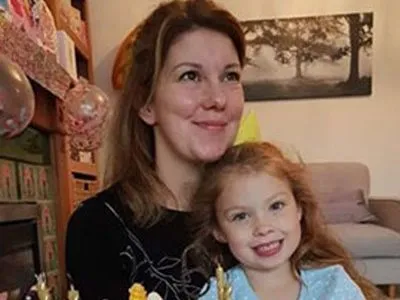 Rachael TaylorSleep Coach, HSCP Graduate
"For me it was a degree-level professional education on everything you need to know about sleep, not just a philosophy to follow. I've done lots of training and hands down this is the most comprehensive."
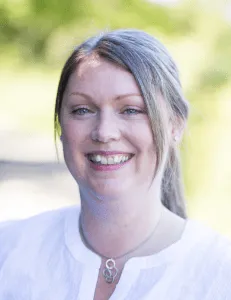 Nadia EdwardsHSCP Graduate
Frequently asked questions
What is holistic sleep coaching?
Is holistic sleep coaching the same as no-cry sleep training?
Does holistic sleep coaching really work?
How do I find a holistic sleep coach?
How do I train as a holistic sleep coach?
Is the training accredited?
Ready to learn more? Start with our free training.
Explore free resources →