The sleep question always finds you. Nobody's training was built to answer it
Why the professionals families trust most are the ones left with the least sleep science, and what it takes to close the gap properly.
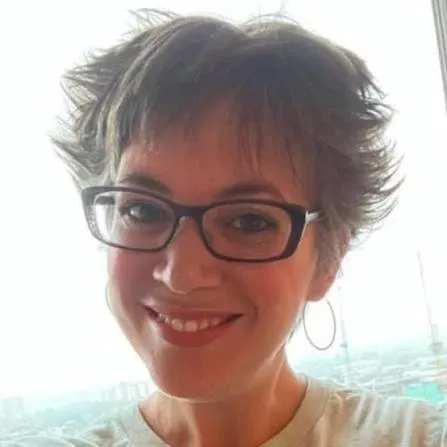 By Dr Lyndsey HookwayPaediatric nurse · IBCLC · PhD researcher
You feel underprepared on sleep because you are. By design, not by failing
Here is a reversal I offer every cohort, because so many arrive quietly embarrassed about the same thing: I work with families every day. I should know more about sleep than I do. Flip it. Sleep occupies a sliver of the curriculum in nearly every profession that families turn to about it. I trained as a paediatric nurse and then as an IBCLC, and I can tell you precisely how much formal sleep science either one gave me: almost none. Midwifery, health visiting, lactation, doula training, occupational therapy: each covers sleep glancingly, if at all, because each curriculum is already full with its own core.
Meanwhile, we work in a field where sleep is among the most common concerns parents raise in the first years, and where the demand lands on whichever professional the family already trusts. So the gap you feel is not a personal deficiency. It is structural. Nobody's core training was built to cover developmental sleep science, which is an entire discipline: sleep architecture, chronobiology, feeding–sleep interactions, assessment, behavioural and relational approaches, the lot.
The embarrassment can go. The gap, though, is real, and it has consequences.

Staying out of sleep is not the neutral option
Many careful practitioners respond to the gap the responsible-feeling way: sleep is not my area, so I say as little as possible. The reversal is uncomfortable but important: your silence does not leave a neutral space. It leaves a vacuum, and the vacuum is filled instantly: an influencer with a rigid schedule, a downloadable plan written for a child nobody has met, a forum, a well-meaning relative. The family does not stop getting sleep advice when you stay quiet. They stop getting good sleep advice.
And poor advice is not harmless. Advice to space feeds or drop night feeds early can quietly sabotage a breastfeeding relationship, because feeding and sleep are one intertwined system in early life, not two separate ones (Ball, 2003). Advice built on "babies this age should sleep X hours" manufactures anxiety and bedtime battles in families whose children are simply at the normal edges of a very wide range (Iglowstein et al., 2003; Galland et al., 2012).
Families keep asking the professional they trust because they want one person who actually knows. The question is whether that person has anything evidence-based to give them.
This way of working has a name, holistic sleep coaching (Hookway, 2026), and a framework behind it that can be properly learned.
Learn more about holistic sleep coaching →What you are missing is not a method. It is the science underneath all methods
Here is the misunderstanding that keeps capable professionals stuck: they assume closing the gap means picking a settling method to recommend. It does not. Methods are the smallest, least interesting layer. What changes your practice is the science underneath: that "sleeping through" is a misnomer and every infant wakes, with the real variable being resettling (St James-Roberts et al., 2015); that unbroken sleep in infancy shows no measurable association with development or maternal mood (Pennestri et al., 2018); that the circadian system is still coming online for months after birth (Rivkees, 2003); that normal sleep need spans an enormous range at every age.
Once you hold that knowledge, something shifts. A parent says "he still wakes at night and he is nine months old", and instead of reaching for a technique, you can assess: sleep need, sleep pressure, development, feeding, health, temperament, family context, the whole ecosystem the child is growing in (Bronfenbrenner, 1979). That is a genuinely different professional offer from anything the sleep industry sells, and families can tell the difference immediately.
Most families do not need a stricter method. They need an accurate map, drawn by someone trained to draw it.
Experience will not close this gap. Study will
One last reversal, because it is the one that decides what you do next. The comforting belief is that enough years with enough families eventually adds up to expertise. Experience is precious, but experience without a framework mostly teaches pattern-matching: what seemed to work last time, tried again. Twenty years in, families still bring me cases that surprise me weekly. That is the honest nature of this work. What makes the surprises workable is not accumulated anecdote. It is a framework rigorous enough to assess what you have never seen before, and supervision so you never face it alone.
That is the standard the Holistic Sleep Coaching Program was built to: accredited at Level 6 through the Open College Network, the same level of academic difficulty as final-year undergraduate study, taught by a faculty of 25+ specialists, with 104 live clinical supervision sessions a year included, for as long as you practise. It exists for exactly the professionals reading this page: doulas, IBCLCs, health visitors, midwives, nurses, OTs, maternity nurses, and practitioners who trained elsewhere and felt the floor was thin.
You already have the families, the trust, and the passion. The science is the missing layer, and it can be learned properly.
Holistic sleep coaching covers the whole of childhood, birth through the teenage years, in one evidence-based framework.
Learn more about holistic sleep coaching →Twenty years in, families still surprise me. Weekly
Nearly every week, in our live supervision sessions, a practising sleep coach brings me a case that genuinely blows my mind. After twenty years, a PhD, and more families than I could count.
I've stopped thinking of that as a gap in my knowledge. I think it's the honest nature of this work. We have never met every child. The parent is the expert on their own child, and children keep us guessing, which is rather what makes them wonderful. Anyone in this field who's stopped being surprised has, I'd gently suggest, stopped paying attention.
It's also why I don't believe in finishing a course and being "done." The real learning starts with real families: your twentieth client, not your last module. Which is why nobody trained by us does that part alone.
References
- Ball, H. L. (2003). Breastfeeding, bed-sharing, and infant sleep. Birth, 30(3), 181–188.
- Bronfenbrenner, U. (1979). The ecology of human development: Experiments by nature and design. Harvard University Press.
- Galland, B. C., Taylor, B. J., Elder, D. E., & Herbison, P. (2012). Normal sleep patterns in infants and children: A systematic review of observational studies. Sleep Medicine Reviews, 16(3), 213–222.
- Iglowstein, I., Jenni, O. G., Molinari, L., & Largo, R. H. (2003). Sleep duration from infancy to adolescence: Reference values and generational trends. Pediatrics, 111(2), 302–307.
- Pennestri, M.-H., Laganiere, C., Bouvette-Turcot, A.-A., Pokhvisneva, I., Steiner, M., Meaney, M. J., & Gaudreau, H. (2018). Uninterrupted infant sleep, development, and maternal mood. Pediatrics, 142(6), e20174330.
- Rivkees, S. A. (2003). Developing circadian rhythmicity in infants. Pediatrics, 112(2), 373–381.
- St James-Roberts, I., Roberts, M., Hovish, K., & Owen, C. (2015). Video evidence that London infants can resettle themselves back to sleep after waking in the night, as well as sleep for long periods, by 3 months of age. Journal of Developmental & Behavioral Pediatrics, 36(5), 324–329.
This is why holistic sleep coaching exists
Whatever families originally hired you for, the sleep question always finds you. Holistic sleep coaching is the evidence-based, assessment-first framework for answering it with your whole chest: the biology first, the assessment second, the strategy last, from birth right through the teenage years. It is not a settling method with softer language. It is a different way of thinking about a whole child and a whole family, which is exactly why it works with the complex cases where technique-based approaches run out.
The Holistic Sleep Coaching Program is where practitioners learn it properly. It is, as far as I know, the most in-depth training of its kind available anywhere: accredited at Level 6 through the Open College Network, the same level of academic difficulty as final-year undergraduate study. It is taught by a faculty of 25+ specialists, and practised under live clinical supervision with me, week in, week out, for as long as you work.
It's built for people who already work with families: doulas, IBCLCs, health visitors, midwives, occupational therapists, sleep practitioners who trained elsewhere and wanted more depth, and career changers who are serious about doing this properly. Watch the free training below to see how it is taught, or skip straight to a free call with our team if you are ready to talk it through.
Watch the free 4-part video training
Enter your details below and we'll send you straight to the Holistic Sleep Coaching Revolution: a free video series with Dr Lyndsey Hookway and Emma Dewey. You'll see why surface-level sleep advice often falls short, how to support families responsively while still achieving results, and how to build a trusted sleep consultancy on that foundation. Instant access — watch at your own pace.
Completely free, with instant access — watch in any order that suits you. You'll also receive our emails about all things sleep; unsubscribe any time. We protect your details in accordance with our Privacy Policy.
What happens when practitioners choose depth
“Fully booked in less than 12 months.”
Lucy Bagwell“6 clients a month to 6 a week, with a waitlist.”
Karla“The Holistic programme goes into areas that other courses just don't touch, and as a result it has given me the breadth and depth of knowledge I was really looking for.”
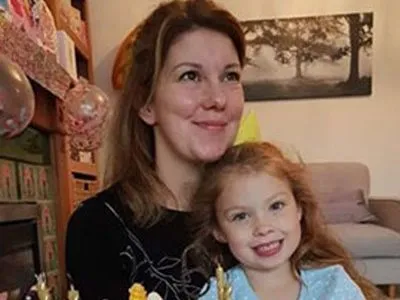 Rachael TaylorSleep Coach
“For me it was a degree-level professional education on everything you need to know about sleep, not just a philosophy to follow. I've done lots of training and hands down this is the most comprehensive.”
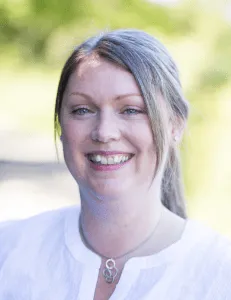 Nadia EdwardsHSCP Graduate
Frequently asked questions
What is holistic sleep coaching?
How is it different from traditional sleep training?
Is the programme accredited?
Do I need previous qualifications or experience to join?
What support do I get during and after the course?
What is your refund and cancellation policy?
Within 14 days of purchase: you can cancel and request a full refund.
After 14 days: cancellations are not eligible for a refund.
To request a refund, email info@babyem.co.uk.
Still reading? That's usually a sign.
Watch the free training →